Why Your « Personalized » Outreach Still Sounds Like Everyone Else’s (And How to Actually Fix It)
Why Your « Personalized » Outreach Still Sounds Like Everyone Else’s (And How to Actually Fix It)
You’ve added {first_name} and {company_name} to your templates. Maybe you even mention their recent funding round. Yet your reply rate hovers around 2%, and the responses you do get are polite rejections or worse -silence. Here’s the uncomfortable truth: what you call personalization, your prospects call spam with extra steps.
This guide breaks down exactly how to build AI-powered outreach that prospects actually respond to -with specific tactics, real numbers, and the mistakes that kill campaigns before they start.
What « AI Personalization » Actually Means (Hint: It’s Not Mail Merge 2.0)
Most sales teams confuse data insertion with personalization. Dropping someone’s job title and company size into a template doesn’t make it personal -it makes it obvious you’re running a sequence.
Real AI personalization works on three levels:
Contextual relevance: Understanding what’s happening at the prospect’s company right now. A CFO at a Series B startup burning $800K/month thinks differently than a CFO at a profitable SMB.
Behavioral signals: Tracking what content they’ve engaged with, what webinars they attended, what competitors they’re evaluating. LinkedIn Sales Navigator shows you who viewed your profile, but AI tools can aggregate 15+ data sources into a single prospect profile.
Psychological profiling: DISC-based communication matching sounds like HR fluff until you realize that a high-D personality wants your email to be 3 sentences with a clear ask, while a high-S needs social proof and relationship-building first.
The difference in results? Generic personalization (name + company) averages 1-3% reply rates. Deep personalization (context + behavior + communication style) hits 15-25% in tested campaigns.

The 5-Step System for Building Your AI Outreach Stack
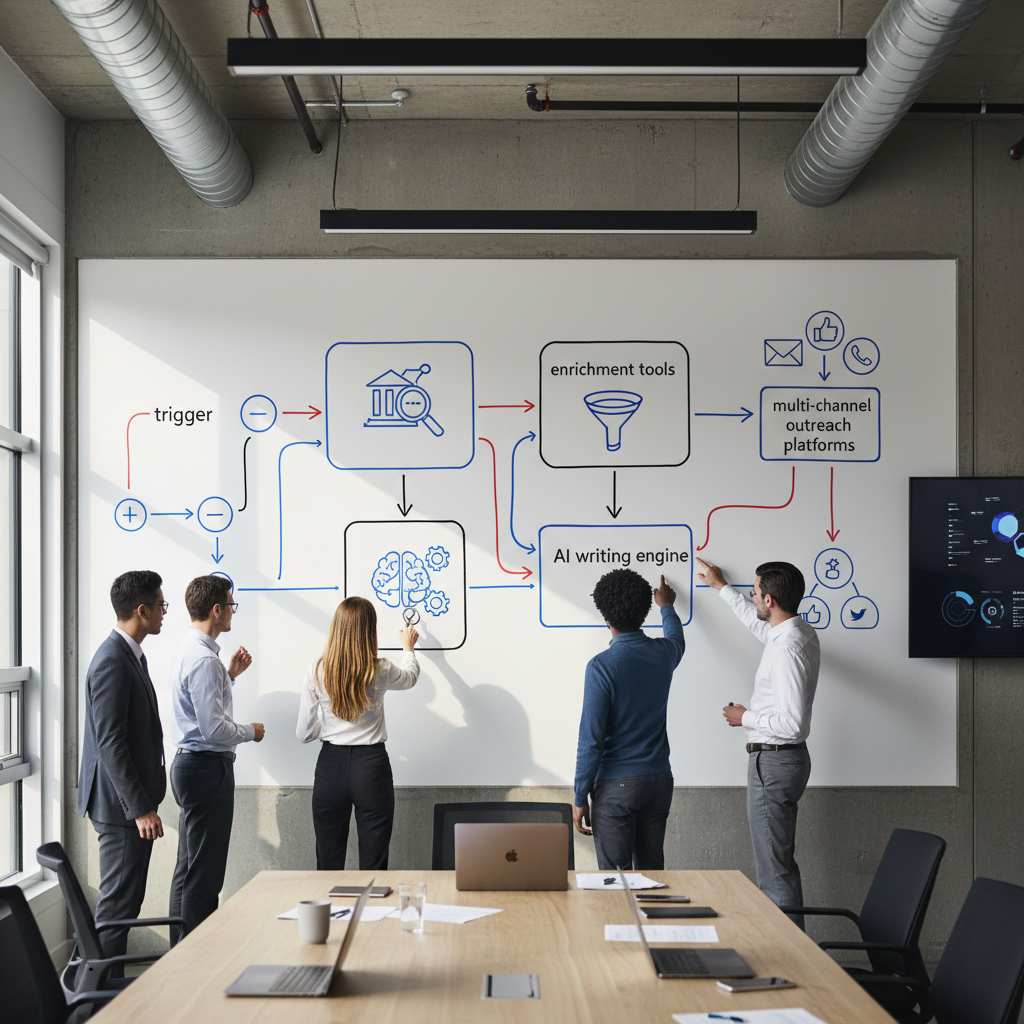
Stop thinking about individual tools. Build a system where data flows automatically from research to writing to sending to follow-up.
Step 1: Signal aggregation (30 minutes setup)
Connect your CRM to a data enrichment layer. Tools pull from LinkedIn, company news, job postings, tech stack data (BuiltWith, Wappalyzer), and funding databases. You want triggers, not static data -« just hired 3 SDRs » matters more than « 51-200 employees. »
Step 2: Scoring and segmentation (automated)
Not every signal deserves immediate outreach. Score prospects based on timing indicators: hiring in your space (intent +3), recent leadership change (intent +2), competitor mentioned in their tech stack (intent +4). Only prospects scoring 7+ enter your active sequence.
Step 3: AI message generation with guardrails
This is where most teams screw up. They let AI write freely, producing messages that read like a fever dream. Set constraints: max 75 words for cold emails, one clear CTA, specific reference to a signal in the first sentence, no superlatives (« revolutionary, » « game-changing »).
Step 4: Multi-channel sequencing
Email alone is dead. A proper sequence: LinkedIn profile view (day 1) → LinkedIn connect with 1-sentence note (day 2) → Email with signal-based hook (day 4) → LinkedIn voice note (day 7) → Email breakup with value-add (day 11). Tools like Humanlinker automate this entire sequence with AI-generated content for each touchpoint.
Step 5: Reply handling and handoff
AI should draft responses to common objections, but you need clear rules for human handoff. « Not interested » gets an AI-generated value resource. « Tell me more » triggers immediate SDR notification. « We’re evaluating X competitor » goes straight to your AE with a custom battlecard.
The 4 Personalization Signals That Actually Move Reply Rates
Not all personalization is created equal. After analyzing thousands of B2B cold emails, these four signal types consistently outperform everything else:
1. Hiring intent (23% average reply rate when referenced)
« Saw you’re hiring 2 Account Executives -scaling revenue teams usually means either fixing process or adding capacity. Either way, worth a 12-minute call? »
Why it works: You’re speaking to a current priority, not a hypothetical problem.
2. Tech stack gaps (18% average reply rate)
« Noticed you’re running Salesforce + Outreach but no intent data layer. Most teams at your stage waste 30% of SDR time on prospects who were never going to buy. »
Why it works: Specific, researched, implies you’ve done homework beyond LinkedIn.
3. Trigger events with timing (21% average reply rate)
« Congrats on closing the $15M Series B last month. Most post-raise companies prioritize hiring speed over hiring process -then spend Q3 fixing what they built in Q1. »
Why it works: Recency + prediction of a problem they haven’t experienced yet.
4. Content engagement (26% average reply rate -highest)
« You downloaded our guide on outbound sequencing three weeks ago. Most people who grab that are rebuilding their SDR playbook. Still working on it or did you solve it another way? »
Why it works: They’ve already raised their hand. You’re continuing a conversation they started.
Pro tip: Combine two signal types for maximum impact. « Hiring 2 AEs + downloaded our sequencing guide » gives you a 31% average reply rate in tested campaigns.
How to Write AI-Generated Messages That Don’t Sound AI-Generated
The irony of AI outreach: the better AI gets, the more every message sounds the same. Here’s how to maintain the efficiency of AI while keeping messages human.
Rule 1: Delete the first sentence
AI almost always starts with throat-clearing: « I hope this email finds you well » or « I noticed you’re the VP of Sales at [Company]. » Delete it. Start with your hook.
Rule 2: Add one imperfect element
Perfect grammar and structure screams automation. Add a conversational fragment. Use a dash instead of a semicolon. Start a sentence with « And » or « But. » Minor imperfections = human signals.
Rule 3: Reference something un-scrapeable
AI pulls from public data. Mention something that required effort to find: a podcast episode they guested on, a specific comment they left on LinkedIn (not just a post), a hiring decision that’s only visible on their company About page.
Rule 4: Match their communication style
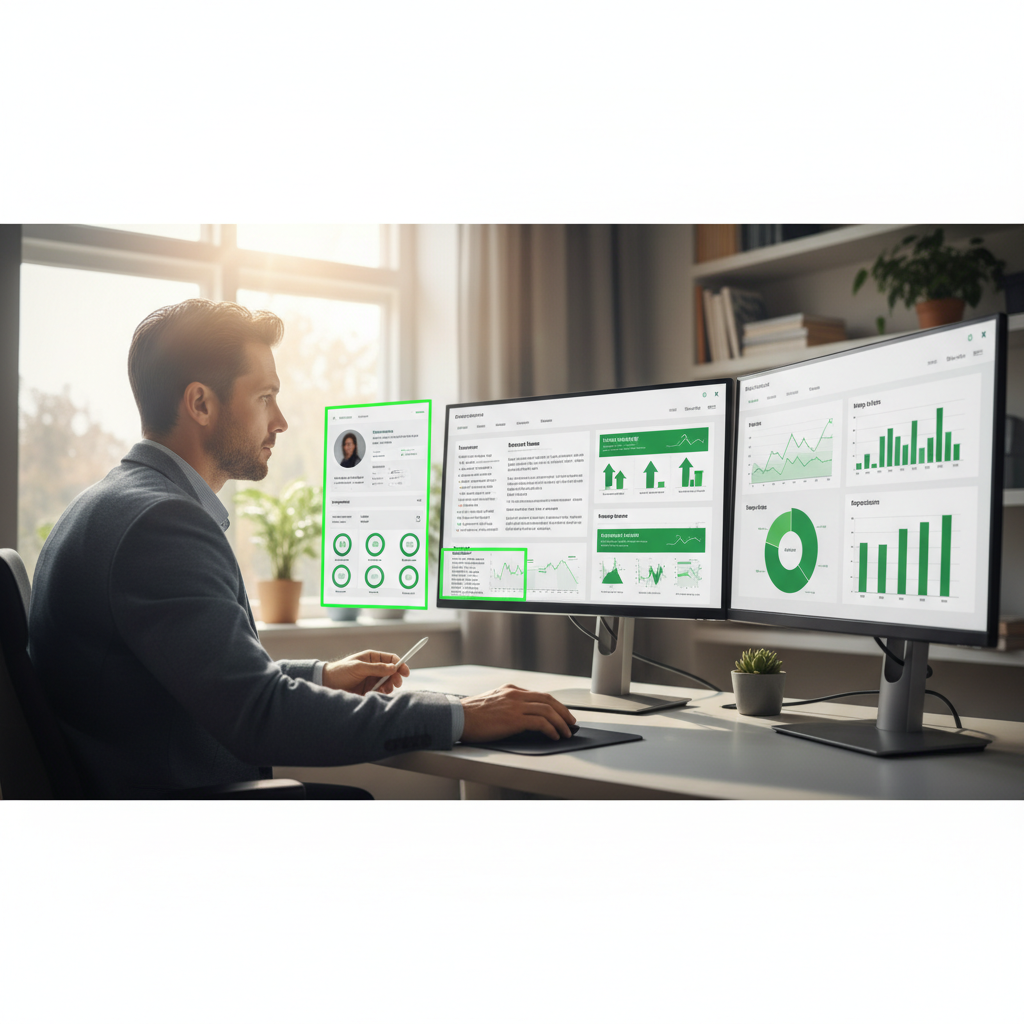
If their LinkedIn posts are formal and structured, mirror that. If they use emojis and casual language, match it. Humanlinker’s DISC personality analysis automates this -it reads their public communication and adjusts your message tone automatically.
Rule 5: End with a low-friction CTA
« Worth a 15-minute call? » is fine but overused. Better options: « Worth exploring or completely off-base? » or « Happy to send a 2-minute Loom if easier than a call » or « Reply with ‘yes’ if you want details -I’ll keep it short. »
Average time to generate an AI message: 8 seconds. Average time to humanize it using these rules: 45 seconds. That’s still 90% time savings versus manual writing.

The Automation Mistakes That Get Your Domain Blacklisted
Speed kills -your domain reputation, specifically. Here’s what actually goes wrong and how to avoid it.
Mistake 1: Blasting 500 emails day one
Email providers track sending patterns. Going from 10 emails/day to 500 overnight flags you immediately. Proper warm-up: start at 20/day, increase by 15% daily, reach full volume over 4-6 weeks. For new domains, double that timeline.
Mistake 2: Ignoring bounce rates
Industry average hard bounce rate: 2.5%. If you’re above 5%, stop sending immediately. Every bounce damages domain reputation. Use email verification (NeverBounce, ZeroBounce) before every campaign -$3-5 per 1,000 verifications saves months of domain repair.
Mistake 3: Same message to same company
Your AI generated a great message. You sent it to 4 people at the same company. Now the CMO is forwarding it to the CTO asking « did you get this exact email too? » That’s not personalization -it’s exposure. Rule: one message thread per company, max 2 contacts in sequence simultaneously.
Mistake 4: No unsubscribe compliance
GDPR fine for non-compliance: up to €20 million or 4% of annual revenue. CAN-SPAM fine: up to $46,517 per email. Beyond legality, « unsubscribe » requests that aren’t honored turn into spam reports. One-click unsubscribe isn’t optional.
Mistake 5: Over-automating the human moments
AI should handle research, first drafts, and follow-up timing. It shouldn’t handle: objection conversations, pricing discussions, or any reply longer than 3 sentences from the prospect. The handoff point matters -automate the grind, preserve the moments that close deals.

What a Week of AI-Powered Outreach Actually Looks Like
Theory is nice. Here’s the actual workflow of a team running 500 personalized touches per week with 2 SDRs.
Monday (2 hours)
Tuesday-Thursday (90 minutes/day)
Friday (1 hour)
The math: 500 touches × 18% reply rate = 90 conversations. 90 conversations × 15% meeting rate = ~14 meetings. Cost per meeting: roughly €35-50 in software + time.
Compare that to pure manual outreach: same results would require 20+ hours of SDR time per week, pushing cost per meeting above €200.

Your Next Step: The 72-Hour Pilot
Don’t overhaul everything at once. Run a controlled test this week.
- Pick 50 accounts from your existing target list
2. Run them through an AI enrichment tool to pull fresh signals
3. Score them by intent (hiring, tech stack, trigger events)
4. Generate personalized first-touch emails using the rules above
5. Send from a secondary domain (protect your primary)
6. Measure: open rate, reply rate, meeting rate
If your reply rate beats your current average by 50%+, you’ve got proof. Scale gradually -add 50 accounts next week, then 100. Tools like Humanlinker can run this entire pilot in about 3 hours of setup time.
The teams still sending batch-and-blast in 2025 are funding their competitors’ pipeline. The question isn’t whether to personalize at scale -it’s how fast you can build the system.